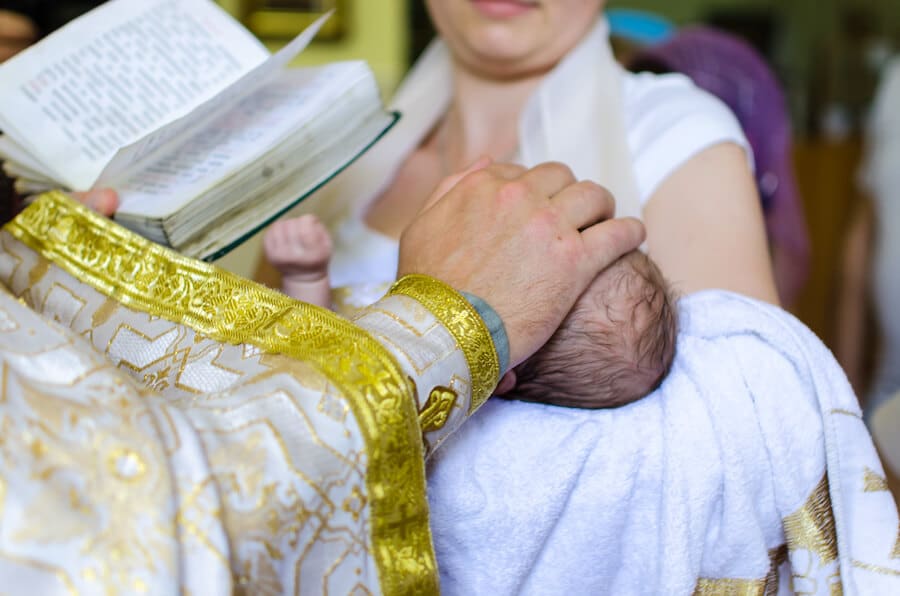
The Catholic Church has seven sacraments: Baptism, Confirmation, Eucharist, Penance, Anointing of the Sick, Holy Orders, and Matrimony. Through them, Christ accompanies the whole of Christian life, from birth to death. Here we explain what each one is, who celebrates it, and what it gives us, with a short prayer for each sacrament.
What is a sacrament?
The Catechism describes the sacraments as "efficacious signs of grace," instituted by Christ and entrusted to the Church, through which we receive divine life.
- They are signs because they can be seen, heard, and touched: water, bread, oil, words, the laying on of hands.
- They are efficacious because they not only signify grace but give it. It is Christ who acts in them.
- They were entrusted to the Church, which celebrates and safeguards them to this day.
The three groups of sacraments
The Catechism groups them this way:
- Sacraments of Christian initiation: Baptism, Confirmation, and Eucharist. They lay the foundations of Christian life.
- Sacraments of healing: Penance and Anointing of the Sick. They heal the wounds of sin and illness.
- Sacraments at the service of communion and mission: Holy Orders and Matrimony. They give a special grace to serve others.
1. Baptism
This is the first sacrament and the gateway to the others. It frees us from original sin and all sins, and makes us children of God and members of the Church (Mt 28:19).
- The sign: water, with the words "I baptize you in the name of the Father, and of the Son, and of the Holy Spirit."
- Who celebrates it: ordinarily a bishop, priest, or deacon. In case of necessity, anyone can baptize, with the intention of doing what the Church does.
- How often: only once, because it leaves an indelible mark on the soul.
Prayer: Father, thank you for my Baptism. Help me live each day as your child. Amen.
2. Confirmation
It completes the grace of Baptism with a special outpouring of the Holy Spirit, like that of Pentecost (Acts 8:14-17). It unites us more closely to Christ and the Church, and strengthens us to bear witness to the faith.
- The sign: anointing with sacred chrism on the forehead and the laying on of the hand.
- Who celebrates it: ordinarily the bishop, or a priest with that faculty.
- How often: only once. It also leaves an indelible mark.
Prayer: Holy Spirit, give me the courage to live and proclaim my faith without fear. Amen. You can continue with the prayer to the Holy Spirit.
3. The Eucharist
This is the sacrament of the Body and Blood of Christ, which makes present his sacrifice on the cross. Jesus instituted it at the Last Supper (Lk 22:19-20). It is not a symbol: under the appearances of bread and wine, Christ is truly present. It is the source and summit of Christian life.
- The sign: bread and wine, with the words of consecration.
- Who celebrates it: the bishop or priest.
- How often: it can be received often, at every Mass. To receive Communion, one must be in a state of grace, and anyone conscious of grave sin should go to confession first.
Prayer: Jesus, I believe you are present in the Eucharist. Stay with me. Amen. If you cannot receive Communion, pray the spiritual communion prayer.
4. Penance and Reconciliation
Also called confession. It forgives sins committed after Baptism and reconciles us with God and the Church (Jn 20:22-23).
- What the penitent does: examines their conscience, repents with the resolve not to sin again, confesses their sins to the priest, and carries out the penance.
- Who celebrates it: the bishop or priest, who gives absolution and must keep absolute secrecy about what he hears.
- How often: as often as needed. The Church asks us to confess grave sins at least once a year.
Prayer: Lord, have mercy on me, a sinner. Thank you for your forgiveness. Amen. To prepare, you can pray the Act of Contrition.
5. Anointing of the Sick
It gives strength, peace, and courage to those suffering a serious illness or the weakness of old age, and unites them to the Passion of Christ (Jas 5:14-15). It also forgives sins if the sick person has been unable to go to confession and, if God wills, sometimes restores health.
- The sign: anointing with oil on the forehead and hands, with a prayer.
- Who celebrates it: only a bishop or priest.
- How often: it can be repeated if the illness worsens or another serious illness arises.
It is not only for the dying. If someone in your family is seriously ill, do not wait until the last moment to call the priest.
Prayer: Lord, sustain the sick with your strength and your peace. Amen. You can find more in the prayer of the sick.
6. Holy Orders
Through this sacrament, the mission Christ entrusted to the apostles continues in the Church. It has three degrees: bishops, priests, and deacons (Lk 22:19; Acts 6:6).
- The sign: the laying on of hands by the bishop and the prayer of consecration.
- Who celebrates it: only a bishop.
- How often: once for each degree, because it too leaves an indelible mark.
Prayer: Lord, send holy priests to your Church and watch over those we have. Amen. You can also pray the prayer to Christ the High Priest.
7. Matrimony
It unites a man and a woman in a lifelong covenant, open to children, and gives them the grace to love each other as Christ loves his Church (Mt 19:6; Eph 5:31-32).
- The sign: the consent the spouses give each other before the Church.
- Who celebrates it: in the Latin Church, the spouses themselves are the ministers of the sacrament, before a priest, deacon, or qualified witness and other witnesses.
- How often: a valid bond lasts until the death of one of the spouses.
Prayer: Lord, bless married couples and make them signs of your faithful love. Amen. To pray for your home, see the prayer to the Holy Family.
Prayer for living the sacraments
Lord Jesus, you come to meet me in the sacraments. Thank you for the water of my Baptism, for the strength of your Spirit, and for the bread of the Eucharist. Thank you for your forgiveness each time I return to you, and for your comfort in illness. Bless priests and married couples.
Do not let me grow used to these gifts. Give me hunger for you, so that I may come to them with faith and live what I receive. Amen.
Frequently asked questions
What are the 7 sacraments in order? Baptism, Confirmation, Eucharist, Penance, Anointing of the Sick, Holy Orders, and Matrimony. This is the order the Catechism uses.
Which sacraments can be received only once? Baptism, Confirmation, and Holy Orders (in each of its degrees), because they imprint an indelible character on the soul.
Can someone receive all seven? It does not usually happen, because Holy Orders and Matrimony are two different paths, though a married man can be ordained a permanent deacon, and a widower can become a priest.
Who instituted them? Jesus Christ. The Church has recognized and safeguarded them from the beginning, and formally taught that there are seven, for example, at the Council of Trent.
Which sacrament is the most important? Baptism is the gateway to all the others, and the Eucharist is the center toward which they are all directed.
What if I have not received a sacrament? It is never too late. Talk to your parish: there are programs (often called OCIA) for adults who want to be baptized, confirmed, receive First Communion, or marry in the Church.